A website for hair and skin clinics is now one of the main places where patients decide whether a clinic appears credible enough to contact. People researching hair loss, scalp conditions, acne scars, pigmentation, ageing concerns, facial treatments or hair restoration usually want more information before booking a consultation. They may compare doctors, review available treatments, check the clinic’s location, watch educational videos and look for a clear way to request an appointment.
Social media can introduce a clinic to potential patients, but it rarely provides all the organised information required to make a considered decision. Posts move quickly, older details become difficult to find and important information may be scattered across different platforms. A professional website gives the clinic one dependable place to present its identity, services, doctor profile, contact information and patient guidance.
For a specialist practice such as Dr. Zahed’s Hair & Skinic, the website can support patient education, trust and appointment access while allowing the clinic to control how its professional information appears online. It can connect treatment pages, videos, patient reviews, location details and booking options within one consistent digital experience.
This is why a website for hair and skin clinics should not be treated as a decorative marketing expense. It is a long-term communication and business asset that can influence how patients discover the clinic, understand its services and decide whether to request a professional consultation.
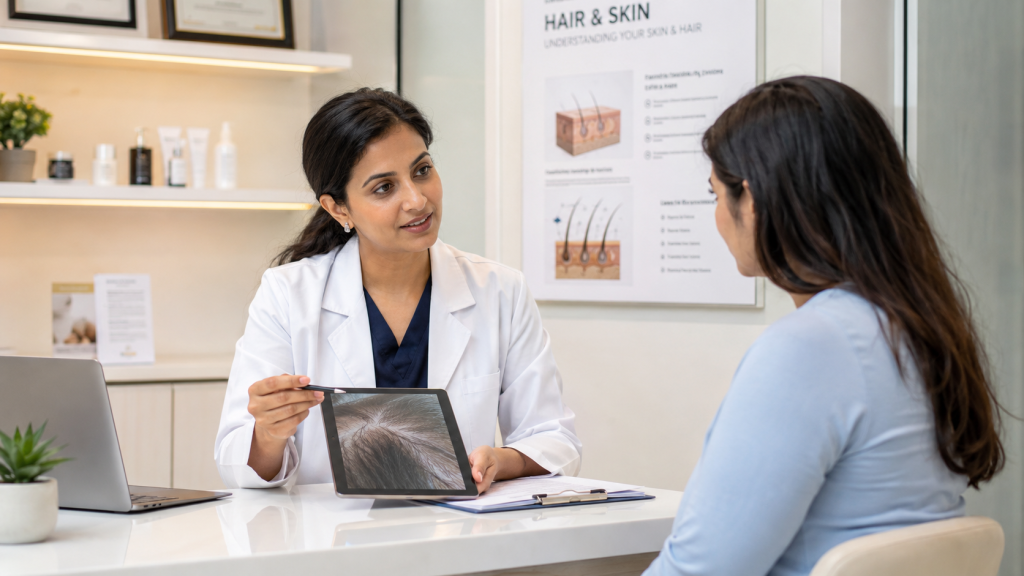
Hair and skin treatments are personal decisions. A patient may feel anxious about visible hair loss, acne scars, pigmentation or another concern that affects confidence. Before discussing the issue with a clinic, that person often wants to know who the doctor is, what treatments are available and whether the organisation appears professional, accessible and responsible.
A well-structured website brings these details together. Visitors can review the doctor’s qualifications, learn about the clinic’s treatment areas, find the address, confirm the phone number and understand how to book a consultation. This reduces uncertainty before the first call or appointment.
The quality of the website also influences the clinic’s first impression. Clear navigation, readable content, professional photographs and accurate information suggest that the clinic pays attention to communication and patient access. An outdated website can create the opposite impression. Broken pages, missing images, inconsistent contact details or an appointment form that does not work may cause a patient to leave before making contact.
A professional website does not prove that a particular treatment will be suitable or successful. Medical and aesthetic outcomes depend on individual factors and professional assessment. However, the website can show that the clinic is identifiable, active and serious about providing reliable information.
This matters because patients often discover a clinic through several channels. Someone may first see a Facebook post, watch a YouTube video, receive a recommendation through WhatsApp and then search for the clinic on Google. The website becomes the place where those separate interactions can be verified.
When the doctor’s name, clinic identity, address, treatment information and appointment process remain consistent, the patient receives a more coherent impression. When those details conflict, trust can decline before the person has spoken with the clinic.
A website for hair and skin clinics therefore works as an official digital reference point. It gives patients a source they can revisit while comparing providers, discussing treatment with family members or preparing questions for the doctor.
The website also gives the clinic greater control over how information is presented. A social platform may display advertisements, unrelated recommendations and public comments beside the clinic’s content. A dedicated website allows the clinic to organise the patient journey without these distractions.
Visitors can begin with the clinic introduction, continue to the doctor profile, review the relevant treatment and then request an appointment. This structured journey helps the clinic present its services professionally without placing excessive pressure on the patient.
Trust is particularly important in hair restoration and aesthetic skin care because patients may encounter exaggerated marketing claims online. A clinic website should provide a more responsible alternative by explaining services clearly and acknowledging that treatment suitability and outcomes can vary.
Hair and skin clinics often provide several services that may appear similar to people without specialist knowledge. Simply listing treatment names is rarely enough. Patients need clear explanations that help them understand the general purpose of each service and why an individual consultation may be necessary.
A person experiencing hair loss may see options such as hair transplantation, scalp PRP, growth-factor treatment or other hair-restoration procedures. Without proper context, the patient may assume every option addresses the same problem or is suitable for every stage of hair loss.
The same issue applies to skin treatments. Acne-scar management, pigmentation treatment, HydraFacial, laser procedures, face PRP and other aesthetic services may have different purposes, processes and suitability considerations. A short social-media caption cannot always explain these differences responsibly.
Dedicated treatment pages allow the clinic to organise this information. Each page can describe the concern the treatment is generally intended to address, what may happen during the consultation and why the doctor must assess the patient before recommending a plan.
The content should not attempt to diagnose visitors online. It should also avoid guaranteed outcomes, exaggerated before-and-after promises or language suggesting one procedure is appropriate for everyone. Hair growth, skin response, healing and treatment results can vary between individuals.
A strong website for hair and skin clinics can explain these limitations without making the content unhelpful. For example, a hair-transplant page may clarify that the doctor needs to examine the pattern of hair loss, donor area, medical history and expectations before determining suitability.
A scalp-treatment page can explain what a consultation may involve and which factors could influence the doctor’s recommendation. It can also distinguish the treatment from hair transplantation so that patients do not assume the two services are interchangeable.
For skin services, the website can help patients distinguish between general cosmetic maintenance and treatment for a specific concern. It can encourage professional assessment when symptoms, skin type or previous treatment history may affect the plan.
This information improves the quality of enquiries. Patients who have already reviewed the relevant treatment page are more likely to arrive with focused questions and realistic expectations. Clinic staff may also spend less time correcting misunderstandings created by short advertisements or unverified online advice.
The website can connect related information naturally. A blog article about common causes of hair loss can lead readers to the hair-restoration section. An article about acne scars can guide visitors to the relevant consultation or treatment page. An article about preparation before a facial procedure can direct readers toward the clinic’s appointment information.
This creates a useful path from education to professional assessment. The patient is not pushed immediately toward a purchase decision. Instead, the website provides enough information to help the visitor understand why consultation is necessary.
A website for hair and skin clinics can also answer common practical questions. Patients may want to know whether a consultation is required, how to prepare for an appointment, where the clinic is located and how follow-up communication is handled.
These questions should be answered in clear language. Excessively technical terminology may confuse visitors, while oversimplified marketing language may fail to provide enough useful information.
For Dr. Zahed’s Hair & Skinic, separate pages for hair restoration, scalp care and skin treatments can help visitors explore the relevant services before requesting an appointment.
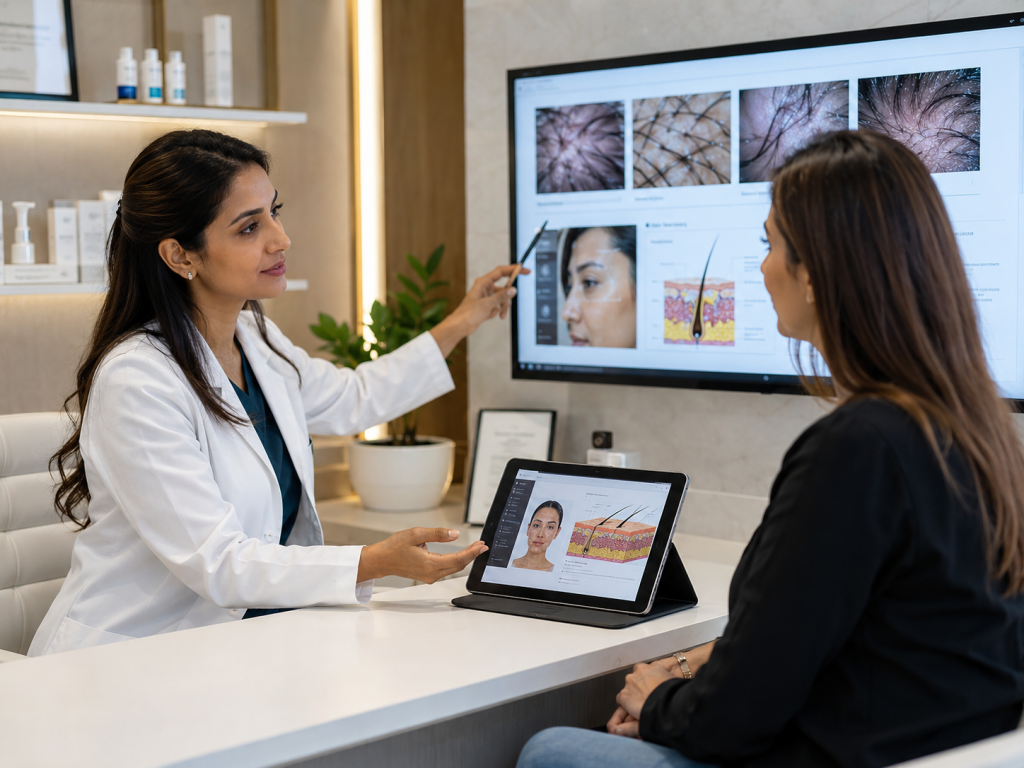
Patients choosing a hair or skin clinic are not only comparing treatment names. They are also evaluating the professional who will assess their concern and guide the treatment process.
A clinic website should therefore include a detailed and accurate doctor profile. Relevant qualifications, professional experience, areas of practice and consultation information should be presented clearly. This helps patients understand the professional background connected to the clinic’s services.
The profile should remain factual. Unsupported claims such as “guaranteed results,” “permanent success” or “the best treatment for everyone” can reduce credibility and create unrealistic expectations.
A more responsible profile explains the doctor’s background and approach without promising an identical result for every patient. It may describe the areas in which the doctor works, the types of concerns commonly assessed and the importance of selecting treatment based on an individual consultation.
Educational videos can strengthen this section. A patient may feel more comfortable after hearing the doctor explain how consultation works, why hair loss requires assessment or how treatment options differ.
Video can make the doctor feel more approachable before the first visit. It can also help patients understand the doctor’s communication style and general approach to treatment planning.
Written information remains important even when video is available. Some visitors cannot watch with sound, some prefer reading and others want to scan the main points quickly. A combination of concise written explanations, professional photographs and selected videos creates a more accessible experience.
A website for hair and skin clinics can organise the doctor’s educational content by topic. Videos about hair transplantation, scalp care, acne scars, pigmentation and treatment preparation can be placed beside the relevant service pages instead of remaining scattered across social media.
This supports both patient education and professional positioning. The doctor is presented not only as someone promoting treatments but as a specialist helping patients understand their concerns and available options.
For Dr. Zahed’s Hair & Skinic, a structured profile can connect Dr. Zahed’s professional background with the clinic’s hair-restoration and skin-care services. Visitors can review this information before deciding whether to request an individual consultation.
The website should also make it clear who is responsible for the medical information being published. Treatment articles and service descriptions should be reviewed by the appropriate professional before publication.
Author information can be added to educational articles where appropriate. This helps visitors understand whether the content was written or reviewed by a healthcare professional.
The doctor profile must remain current. If qualifications, clinic hours, treatment focus or consultation arrangements change, the website should be updated. Outdated professional information can create confusion and may weaken patient confidence.
After reviewing the clinic and treatment information, the patient should have a clear next step. The website should make it easy to call, send a message, find the clinic or request an appointment.
A website for hair and skin clinics can include visible booking buttons, clickable phone numbers, a WhatsApp option and a short appointment form. The right combination depends on the clinic’s internal process, but every method must connect to a team member responsible for responding.
A booking feature does not create value when nobody monitors it. An online form may appear to submit successfully while the message never reaches the clinic. A WhatsApp button may lead to an inactive number. Consultation hours may also change without being updated online.
The website should therefore reflect the clinic’s actual workflow. Staff should know where digital enquiries arrive, who will respond, how quickly patients can expect a reply and how appointments will be confirmed.
Clear location information is equally important. The contact page should display the correct address, map, nearby landmarks where appropriate, telephone number and consultation hours. This is particularly useful for patients travelling from another part of Dhaka or from outside the city.
A well-organised website can also reduce repetitive enquiries. When treatment information, consultation procedures, doctor details and clinic location are explained clearly, staff receive fewer basic questions and can focus on patients who are ready to discuss an appointment.
The form itself should remain short. It may request the patient’s name, phone number, preferred contact method and general service of interest.
A basic website form should not request extensive or sensitive medical details unless the clinic has an appropriate system for protecting and managing that information. The initial objective is usually to begin communication, not to conduct a complete clinical assessment online.
The website should also set reasonable expectations. An appointment request is not always the same as a confirmed appointment. A simple message explaining that the clinic team will contact the patient for confirmation can prevent confusion.
For hair and skin clinics running digital advertising campaigns, this booking journey is particularly important. Paid traffic is wasted when visitors reach a treatment page but cannot find a clear contact option.
The message used in an advertisement should also match the information on the destination page. A visitor clicking an advertisement about scalp PRP should reach a relevant scalp-treatment page rather than a general homepage containing little information about the procedure.
A clear appointment path makes campaign performance easier to measure. The clinic can track calls, form submissions, WhatsApp clicks and booking requests instead of evaluating the campaign only through impressions or website traffic.
A website for hair and skin clinics can therefore connect patient interest with a measurable action. It helps the clinic determine which treatments, articles and campaigns generate relevant consultation enquiries.

Many patients discover hair and skin clinics through mobile phones. They may see a treatment video on Facebook, receive a clinic link through Messenger or WhatsApp, or search for a doctor while travelling.
The mobile version of the website is therefore not secondary. For many visitors, it is the main experience.
Text should be readable without zooming, buttons should be easy to select and treatment images should display correctly. Visitors should be able to review the doctor’s profile, find the clinic address and request an appointment without navigating through a complicated menu.
Page speed also matters. Hair and skin clinic websites often contain high-resolution photographs, treatment graphics and videos. These elements can support communication, but they can also slow the website when they are not optimised.
A slow page may prevent a patient from reaching important information. Visitors using a weaker mobile connection may leave before seeing the treatment details or booking option. Images should therefore be compressed appropriately, videos should be embedded efficiently and unnecessary scripts should be removed.
Google uses the mobile version of a site’s content for indexing and ranking, and recommends creating a mobile-friendly experience. Clinics planning technical improvements can review Google’s mobile-first indexing guidance.
A mobile-friendly website for hair and skin clinics is therefore relevant to both patient usability and organic search visibility.
Accessibility should also be considered. Clear headings, readable fonts, suitable contrast, descriptive image text and straightforward navigation help more people use the website.
The W3C Web Content Accessibility Guidelines provide internationally recognised technical guidance for making web content more accessible to people with disabilities. Clinics and their development teams can review the WCAG accessibility guidance when improving the website.
Local search visibility is another important benefit. Patients may search for a skin doctor in Dhaka, a hair-transplant clinic in Bangladesh, scalp PRP treatment or a clinic near a particular location.
A properly structured website helps search engines understand what the clinic provides and where it operates. The business name, address and phone number should remain consistent across the website, Google Business Profile and legitimate online listings.
Each important treatment should have a focused page, while supporting articles should answer patient questions without duplicating the primary service content.
A website for hair and skin clinics should not repeat location and treatment keywords unnaturally. Search visibility is stronger when pages provide useful information that matches what patients are trying to understand.
For example, the main hair-transplant page should explain the clinic’s service and consultation process. A supporting article might discuss questions patients should ask before considering a hair transplant. The two pages serve different search intentions and should link to one another naturally.
The objective is not simply to attract more visitors. The website should reach relevant people and guide them toward a suitable treatment page, contact option or consultation request.
Visual content is important in the hair and skin sector because patients often want to understand the clinic environment, treatment process and previous work. However, this content must be presented responsibly.
Patient photographs should only be published with appropriate permission. Before-and-after examples should not suggest that every patient will achieve the same result.
Individual outcomes can vary based on the condition, treatment plan, biological response, aftercare and other factors. Visual examples should therefore include enough context to prevent unrealistic expectations.
A professional website for hair and skin clinics gives the clinic more control over the context surrounding visual evidence. Instead of posting an isolated image, the clinic can explain the type of case, treatment process and reason individual assessment remains necessary.
Patient reviews can also strengthen trust when they are genuine. Testimonials are most useful when they describe communication, professionalism, clinic management and the overall experience.
They should not be invented, heavily edited or presented as guarantees of a specific treatment result. One patient’s experience does not determine what another patient will experience.
The website can organise reviews according to relevant services or clinic experiences. A review related to hair restoration may appear near the hair-treatment section, while feedback about the consultation process may appear on the appointment page.
Educational content creates another opportunity. The clinic can publish articles about hair loss, scalp health, acne scars, pigmentation, treatment preparation and common patient questions.
These articles can support people who are still researching and may not be ready to book immediately. They can also help the clinic address misinformation or unrealistic expectations circulating through informal online sources.
The content should remain within appropriate professional boundaries. It should provide general information without replacing diagnosis or personal medical advice. Treatment claims should be reviewed by the clinic’s qualified professional team before publication.
Rich media can make this content more useful. A written article may include a short doctor video, an approved diagram or a clinic photograph.
Every image should use descriptive alt text that explains what it shows rather than repeating the focus keyword without purpose. For example, an image showing Dr. Zahed explaining a scalp treatment could use the alt text:
Dr Zahed explaining scalp treatment options during consultation
This is more useful than inserting “website for hair and skin clinics” into every image regardless of the actual subject.
A consistent educational library can strengthen the clinic’s long-term digital presence. Patients may discover the clinic while searching for an answer to a specific question and then continue to the relevant treatment page or consultation form.
Educational content can also be reused across the clinic’s channels. A detailed blog article may support a short social-media post, an educational video or an appointment follow-up message.
The website remains the central location containing the complete information, while social platforms help distribute selected parts of that content.
A website for hair and skin clinics must continue working after launch. Treatment information, doctor availability, consultation hours and contact methods may change. These updates should be reflected online before outdated information begins affecting patients.
Technical maintenance is equally important. WordPress core files, themes, plugins, forms and security tools require regular review. Outdated components may create compatibility problems, reduce website speed or introduce avoidable security risks.
Backups should be completed routinely. Administrative access should be protected with strong passwords and appropriate user permissions.
Contact and appointment forms should be tested to confirm that enquiries reach the clinic. Broken links, missing images and incorrect buttons should be repaired promptly.
Clinics should also monitor what information their forms collect. The website should request only what is required for initial communication. Sensitive patient information should not be collected through an ordinary form unless the clinic has a suitable system and policy for protecting it.
Where internal technical resources are limited, a specialist digital partner such as Kaizen Digital Hub can support website development, performance improvement and ongoing maintenance.
The clinic should still retain ownership and administrative access to its domain, hosting, analytics and website accounts. The digital partner’s role is to maintain and improve the technical platform.
Medical information, treatment descriptions and patient-facing claims should remain subject to the clinic’s professional review and approval.
Regular maintenance protects more than appearance. It helps preserve search visibility, advertising performance and patient access.
A clinic may invest in videos, social media or paid campaigns, but those activities become less effective when they direct visitors to a slow, outdated or malfunctioning website.
Website analytics can also support better decisions. The clinic may review which treatment pages receive the most visits, which articles attract relevant search traffic and which pages generate appointment requests.
Traffic alone should not be treated as the final result. The clinic should evaluate calls, form submissions, WhatsApp enquiries, booking requests and visits to important treatment pages.
A smaller number of relevant visitors may provide more value than large amounts of unrelated traffic.
A professional website for hair and skin clinics also gives the organisation control over a long-term digital asset. Social platforms can change their algorithms, reduce organic reach or restrict account access.
A website owned by the clinic can continue developing through new treatment pages, educational content, case examples and improved booking features.
This supports sustainable growth. The clinic can use the website as the central destination for search optimisation, social media, online advertising, referral traffic and patient education.
Each channel becomes more effective when it leads to complete, accurate and professionally organised information.
Although every clinic is different, the website should provide enough information to help patients verify the organisation and understand the consultation journey.
The most important elements are a clear doctor profile, dedicated treatment pages, accurate contact details, visible appointment options and a mobile-friendly design.
The website should also include responsible photographs, approved patient reviews, privacy information and educational content relevant to the clinic’s actual services.
Technical security, backups, form monitoring and regular updates should be part of the operating process rather than occasional emergency work.
These elements should not be added simply to make the website look larger. Every page should answer a patient question or support a practical action.
A treatment page explains a service. A doctor profile builds professional context. A location page helps patients visit the clinic. A blog article answers a focused question. An appointment page turns interest into communication.
When these pages work together, the website becomes easier for patients to use and easier for search engines to understand.
The clinic should also review the website periodically from the patient’s perspective. The team can test whether a new visitor can identify the doctor, understand the treatments, find the location and request an appointment without unnecessary confusion.
A professional website for hair and skin clinics supports patient trust, treatment education, appointment access and long-term digital visibility. It gives the clinic a controlled platform where patients can review the doctor, understand available services and find accurate contact information.
Its value depends on more than visual design. Clear treatment pages, responsible claims, mobile usability, reliable forms, website security and ongoing maintenance all contribute to the patient’s digital experience.
The website should not replace professional assessment or promise identical outcomes. Its role is to provide reliable general information and make the consultation journey easier.
For a specialist provider such as Dr. Zahed’s Hair & Skinic, the website can connect hair-restoration services, skin-care treatments, doctor-led education, patient reviews and appointment access within one professional environment.
Patients interested in hair restoration, scalp care or skin treatments can explore the available services at Dr. Zahed’s Hair & Skinic and book an appointment for an individual consultation.
REQUEST FOR YOUR